 admin
admin 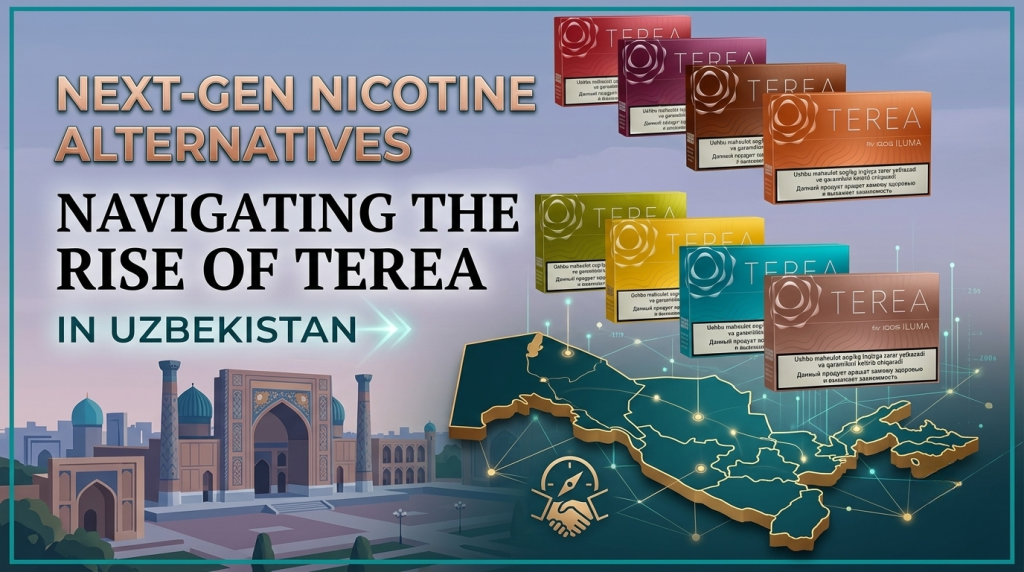
Honestly, I did not expect Uzbekistan to come up as often as it does in conversations about heated tobacco. But over the last couple of years, the questions keep coming, mostly from people in Tashkent or Samarkand asking where to actually get proper Terea sticks without getting sold something fake or stale.
That alone tells you something about where this market is heading.
Uzbekistan has a smoking culture that goes back generations. Traditional tobacco use, naswar, cigarettes, it has always been part of daily social life especially among men. But the generation that is now in their late twenties and thirties is visibly uncomfortable with some of that. Not in a preachy way, more in a practical way. They do not want smoke on their clothes when they go to work. They do not want to step outside every hour at a social gathering. They want something that fits into a cleaner, more modern version of their lives without requiring them to give up nicotine entirely.
That is exactly the space Terea was built for.
What Terea Actually Is and Why It Matters Here
Terea sticks are the tobacco units that go inside the IQOS ILUMA device. The ILUMA uses induction heating, so there is no blade, no combustion, no ash. The tobacco gets heated to a temperature that releases nicotine and flavor but never actually burns. This is not a vape. It is not a nicotine patch. It is heated tobacco, which is its own distinct category and one that has been growing fast in markets across Asia, Eastern Europe, and the Gulf.
The reason it matters specifically in the Uzbek context is straightforward. A large portion of the adult population already uses nicotine and is not looking to stop. What they are looking for is a version of that habit that causes less friction in modern daily life. Terea delivers that without asking anyone to make a dramatic lifestyle overhaul.
Flavor options help too. The range covers smooth tobacco profiles, menthol, and some more layered aromatic variants. For a market where taste and sensory experience matter, having actual variety makes a real difference.
Getting the Product Into Uzbekistan
Here is where things get practical and honestly where most of the interesting stuff is happening right now.
Local retail availability inside Uzbekistan is patchy at best. You might find something in Tashkent if you know where to look, but stock is inconsistent and the product range is limited. This is pretty typical for markets at this stage of HTP adoption. The formal distribution infrastructure catches up later, after demand has already established itself through informal and online channels.
What has actually been driving access for Uzbek consumers is sourcing from outside the country, specifically from hubs like Dubai where the product supply is reliable, the range is complete, and authenticity is not a question mark. Dubai sits in a genuinely useful geographic and commercial position for this. It has established trade links across Central Asia, the logistics infrastructure is solid, and suppliers based there can reach customers in Tashkent faster and more reliably than most alternatives.
For anyone in Uzbekistan who has been trying to navigate this, Terea Uzbekistan options through Dubai-based suppliers have become the go-to solution. You get the full range, consistent stock, and you know what you are actually receiving.
Why Uzbekistan Specifically Is Growing So Fast
A few things are happening at once here and they are all pushing in the same direction.
The country is urbanizing quickly. Tashkent has changed a lot in a short period. New commercial districts, stricter rules around smoking in indoor public spaces, a hospitality and food scene that is trying to attract both local and regional visitors. All of that creates an environment where smoke-free or lower-smoke alternatives fit naturally.
There is also the travel factor. Uzbek nationals who spend time working or living in South Korea, Japan, Russia, or the UAE come back familiar with IQOS and Terea. They have used the product, liked it, and brought the habit or at least the knowledge home with them. Word of mouth from someone in your own network who has actually used something is worth more than any amount of advertising.
And then there is just the regional momentum. Kazakhstan adopted HTPs noticeably earlier and the uptake there has been significant. Uzbekistan shares deep cultural and social ties with Kazakhstan. Trends that establish themselves in Almaty or Astana tend to make their way across the border with a delay of a year or two, not a decade.
The Honest Picture on Regulations and Access
Central Asian governments are still figuring out how to classify and regulate heated tobacco products. Some have moved faster than others. Uzbekistan is still in a relatively early stage of that regulatory development, which creates some ambiguity around formal domestic availability.
What this means practically is that the most reliable access route for most consumers right now runs through established international suppliers rather than local retail. That is not unusual for a market at this stage. It is actually how adoption looked in several now-mature HTP markets before domestic distribution caught up with demand.
As the regulatory picture clarifies and formal distribution expands, local availability will improve. But for the foreseeable future, the consumers who are getting the best experience are the ones who have found reliable supply from outside rather than waiting for local retail to sort itself out.
Is This a Lasting Shift or Just a Trend
Looking at how heated tobacco adoption has played out in Japan, South Korea, and parts of Europe, the pattern is pretty consistent. It starts with urban early adopters, spreads through social and professional networks, and over several years reaches a point where HTPs become a normal and unremarkable part of the consumer landscape.
Uzbekistan has all the ingredients for that arc. Young urban population, existing nicotine use, growing awareness of alternatives, and improving access through international supply channels. The direction seems clear even if the timeline is hard to pin down precisely.
For people already using nicotine in Uzbekistan, the practical message is simple. There are better options available now than there were a few years ago, getting access to them has become easier, and the experience has genuinely improved with newer devices and a wider product range. Whether that translates into a full market transformation is a question of time more than anything else.